
PDF Ebook The Biology of Desire: Why Addiction Is Not a Disease, by Marc Lewis
The various other interesting books may be ranges. You could locate them in also eye-catching title. However, what make you brought in to pick The Biology Of Desire: Why Addiction Is Not A Disease, By Marc Lewis is that it comes with different design as mentioned. The language belongs to be the easy language use. Exactly how the author shares to the viewers is very clear and also legible. It makes you feel easy to recognize specifically when the author talks about.
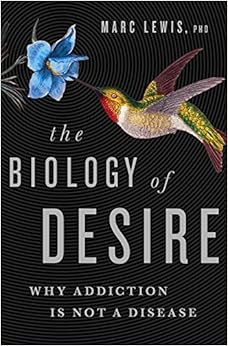
The Biology of Desire: Why Addiction Is Not a Disease, by Marc Lewis

PDF Ebook The Biology of Desire: Why Addiction Is Not a Disease, by Marc Lewis
This is it guide The Biology Of Desire: Why Addiction Is Not A Disease, By Marc Lewis to be best seller just recently. We offer you the best deal by getting the stunning book The Biology Of Desire: Why Addiction Is Not A Disease, By Marc Lewis in this site. This The Biology Of Desire: Why Addiction Is Not A Disease, By Marc Lewis will not just be the type of book that is difficult to discover. In this web site, all kinds of books are provided. You could look title by title, author by author, and publisher by author to learn the best book The Biology Of Desire: Why Addiction Is Not A Disease, By Marc Lewis that you could review currently.
Any publications that you read, no matter exactly how you got the sentences that have actually been read from guides, surely they will give you goodness. Yet, we will certainly show you among recommendation of guide that you have to review. This The Biology Of Desire: Why Addiction Is Not A Disease, By Marc Lewis is just what we definitely mean. We will show you the reasonable reasons you need to read this publication. This publication is a type of valuable book written by a seasoned author.
The soft file suggests that you need to visit the link for downloading and then save The Biology Of Desire: Why Addiction Is Not A Disease, By Marc Lewis You have possessed the book to read, you have posed this The Biology Of Desire: Why Addiction Is Not A Disease, By Marc Lewis It is easy as going to the book stores, is it? After getting this quick explanation, hopefully you can download and install one as well as begin to read The Biology Of Desire: Why Addiction Is Not A Disease, By Marc Lewis This book is quite simple to check out whenever you have the downtime.
However, the existence of this publication has the means exactly how you truly require the much better choice of the brand-new updates. This is what to recommend for you in order to get the opportunities of making or developing brand-new publication. When The Biology Of Desire: Why Addiction Is Not A Disease, By Marc Lewis becomes one that is preferred today, you should be one part of such many individuals that always read this publication as well as get this as their buddy.
Review
Dr. Lewis... a former addict who recovered to become a distinguished neuroscientist and author ... writes engagingly about the addictive experience, the recovery experience and the science behind them. Whether you are looking for a foundation in the neuroscience of addiction, guidelines for recovery or just hope that recovery is possible, it's all here. The scientific information is presented in the context of day-to-day behavior and the lives of individuals you will come to care about. You'll learn more about neuroscience (and human development and psychology) than you may have thought possible. Informed by this book, you'll see how neuroscience explains addiction as a part of life, rather than a mysterious entity only experts can understand.Tom Horvath, Ph.D., President of ABPP, Practical Recover, and SMART Recovery and author of Sex, Drugs, Gambling & Chocolate: A Workbook for Overcoming AddictionsMarc Lewis's new book neatly links current thinking about addiction with neuroscience theory and artfully selected biographies. Ex-addicts, we learn, are not 'cured'; rather they have become more connected to others, wiser, and more in touch with their own humanity. This is a hopeful message that has, as Lewis demonstrates, the advantage of also being true.Gene Heyman, author of Addiction: Disorder of ChoiceThe Biology of Desire says a lot about the brain mechanisms underpinning addiction but, to its credit, does not stop there. With minor exceptions, we do not help addicts (and they do not help themselves) by ministering directly to their brains. As Mr. Lewis stresses throughout this unorthodox but enlightening book, people learn to be addicts, and, with effort, they can learn not to be addicts, too.Wall Street JournalInformed by unparalleled neuroscientific insight and written with his usual flare, Marc Lewis's The Biology of Desire effectively refutes the medical view of addiction as a primary brain disease. A bracing and informative corrective to the muddle that now characterizes public and professional discourse on this topic.Gabor Mat, M.D., author of In The Realm of Hungry Ghosts: Close Encounters With AddictionNeuroscientist Lewis delves into the functioning of the addicted brain. He intends to demonstrate that addiction (substance abuse but also behavioral addictions such as eating disorders, gambling, etc.) is not a disease....This objective is met by the detailed life stories of five recovering addicts the author has interviewed. Their descent into the grips of addiction reads like passages of a junkie's memoir: terrifying and page-turning.... [T]his work helps make sense of how addiction operates and is recommended for readers wanting to learn more on the topic.Library Journal
Read more
About the Author
Marc Lewis, PhD, is a neuroscientist and professor of developmental psychology. Now at Radboud University in the Netherlands, he taught for more than twenty years at the University of Toronto. He has authored or coauthored more than fifty journal articles in neuroscience and developmental psychology. Presently, he speaks and blogs on topics in addiction science, and his critically acclaimed book, Memoirs of an Addicted Brain: A Neuroscientist Examines His Former Life on Drugs, is the first to blend memoir and science in addiction studies.
Read more
Product details
Paperback: 256 pages
Publisher: PublicAffairs; Reprint edition (August 23, 2016)
Language: English
ISBN-10: 1610397126
ISBN-13: 978-1610397124
Product Dimensions:
5.5 x 0.6 x 8.2 inches
Shipping Weight: 9.4 ounces (View shipping rates and policies)
Average Customer Review:
4.3 out of 5 stars
120 customer reviews
Amazon Best Sellers Rank:
#57,186 in Books (See Top 100 in Books)
I have read Lewis' other book and follow his blog, and find his arguments among the most clear and comprehensive out there. He is not to be dismissed based on the title alone, which other reviewers seem wont to do. I'm giving this book 5 stars because it taught me things I did not know, despite having read hundreds if not thousands of peer-reviewed articles on drug use and addiction. Anything that makes me think differently about my own field of research deserves 5 stars.Lewis manages to synthesize a large body of literature that a layperson (which I am when it comes to the neurobiology of addiction) cannot do on one's own. I've always wished I could have a conversation with an addiction neuroscientist who had not blindly accepted the disease model, and that is essentially what this book is. However, his disagreements with others such as Nora Volkow are actually quite subtle and sophisticated, and I wonder if readers will miss the subtlety, chalking it up to mere semantics. For instance, “hijacking†of the brain’s natural reward system is the metaphor often used in the brain disease model, which some might argue is not that different from Lewis’ notion that addiction is an “accelerated†or “deep†form of the developmental learning our brains are meant to do. However, I think one crucial difference is he’s challenging the notion that the DRUG is the key point on which to intervene. The disease model needs a vector or pathogen, which the drug becomes, and this turns our attention away from what the person is experiencing and the meaning attached to that experience. Rather, Lewis argues, we have a natural motivation toward powerful emotional experiences, and drugs can provide a particularly powerful experience that we more quickly learn to seek out than other, less powerfully motivating experiences (nonlinear dynamics here being critical). Over time, people who are addicted (and not just to drugs) become trapped in the moment-to-moment experiences and disconnected from their past and future. The question becomes, how does the perspective change such that the meaning attached to the experience drugs provide is less powerful? (Understanding this also can help us to understand why most people who try drugs, even heroin, do NOT become addicted...for whatever reason the experience was not as powerful or as meaningful for them.)When we turn our attention away from the big, bad drug, it really does change how we intervene. In particular, we have a lot more to learn in exploring Lewis’ theories around ego fatigue, the addict’s perspective on time (linear v circular), and "social scaffolding." What might drain some people’s willpower more than other people’s? What are the effects of stress, inequality, oppression, and poverty on one’s ability to avoid ego fatigue, or on one’s ability to envision a better future? More importantly, what causes one to shift perspective, and can social scaffolding precipitate and not just take advantage of these shifts in perspective?
Near the end of Lewis’ valuable book on addiction and the misguided addiction treatment industry, the following quote appears:"Addicts experience something breathtaking when they can stretch their vision of themselves from the immediate present back to the past that shaped them and forward to a future that’s attainable and satisfying."He’s making a good point about how self-awareness, identity, and belonging to a caring community contribute to recovery (a word, by the way, he doesn’t like).Problem is, this point comes too late in the book to do much good. I imagine thousands of readers having given up way beforehand. Lewis himself has stated in an ill-advised diatribe against at an Amazon reviewer, the book is meant for the layperson, but that statement is hard to square with his chronic and often confusing references to brain parts that govern craving, “now thinking,†and all the other emotional and physiological factors that make addiction so baffling. He does include a little brain map near the beginning, but that didn’t help me much—and I read this book carefully.Not that his brain mapping, and frequent references to the Ventral striatum, the Amygdala, et al isn’t valuable—it is just presented in too disorganized a manner to be easily understood.Worse, I kept waiting for him to explain how this information could help an addict grow beyond his addiction. He sort of gets to this point at the very end—and his advise comes off as a bit suspect, even if it is well-intentioned. He mentions Peter Sheath’s Reach Out Recovery in the city of Birmingham, England, which is designed to enlist the community in a campaign to help addicts when they decide they want help. Great idea, but it’s unproven (and sounds Utopian). In any case, the final chapter, “Developing Beyond Addiction,†which should be the meat of the book, comes off more as an after-thought.On the plus side, he makes a strong argument—both biological and philosophical—against the disease model, arguing that addiction carves out the same neural canals as growth and learning.Memo to Marc Lewis (from a reader who’s no stranger to this problem): rewrite your book, or write another one, this time with a talented editor who can organize your strong material into something stronger.
The Biology of Desire: Why Addiction Is Not a Disease, by Marc Lewis PDF
The Biology of Desire: Why Addiction Is Not a Disease, by Marc Lewis EPub
The Biology of Desire: Why Addiction Is Not a Disease, by Marc Lewis Doc
The Biology of Desire: Why Addiction Is Not a Disease, by Marc Lewis iBooks
The Biology of Desire: Why Addiction Is Not a Disease, by Marc Lewis rtf
The Biology of Desire: Why Addiction Is Not a Disease, by Marc Lewis Mobipocket
The Biology of Desire: Why Addiction Is Not a Disease, by Marc Lewis Kindle


Tidak ada komentar:
Write komentar